The cosmetic surgery and medical aesthetics landscape in Los Angeles has never been more crowded — or more variable in the quality it delivers. Beverly Hills practices staffed by medical doctors sit alongside clinics where procedures are performed by practitioners whose training bears little resemblance to surgical qualification. The marketing looks similar. The websites look similar. The before-and-after galleries look similar. The outcomes are not.
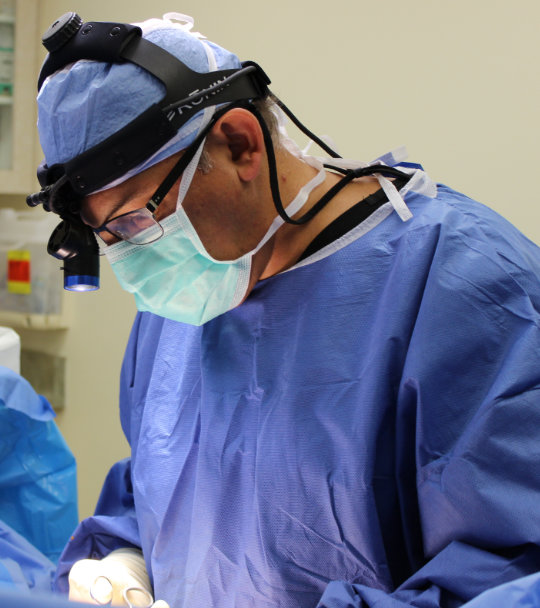
For patients considering any cosmetic procedure — from a minimally invasive treatment to a surgical transformation — the single most important decision they will make is choosing who performs it. At Desired Beauty, Dr. Farzin Kerendian, DO, FACOS, FAACS, brings a credential profile that represents the upper tier of cosmetic and reconstructive surgical training: board-certified by both the American Board of Cosmetic Surgery and the American Osteopathic Board of Surgery, a Fellow of the American College of Osteopathic Surgeons and the American Academy of Cosmetic Surgery, and a chief resident honoree from the Weill Cornell Medicine — Cornell University hospital system in New York City, where he completed his surgical training. Over fifteen years of education and training preceded his first patient interaction.
Here is why those credentials — and the standards they represent — should be at the top of every patient’s checklist.
1. Board Certification Is the Baseline You Can Verify
In the United States, the term “cosmetic surgeon” is not legally protected. Any licensed physician — regardless of specialty or surgical training — can legally market themselves as a cosmetic surgeon and offer procedures including liposuction, rhinoplasty, and facelifts. Patients who don’t know to look past the title assume training exists that may not be present in any meaningful form.
Board certification in cosmetic or plastic surgery provides the verifiable benchmark. To become board-certified by the American Board of Cosmetic Surgery, a physician must complete an accredited residency, demonstrate a specific case volume and procedural range, and pass rigorous written and oral examinations administered by peers in the specialty. This credential cannot be purchased or self-awarded — it must be earned through a defined pathway of documented training and examined competence.
Dr. Kerendian holds dual board certification, a level of credentialing that reflects an extraordinary commitment to demonstrated surgical excellence. When patients verify these credentials — which they can do directly through the certifying boards — they are confirming that the surgeon operating on their body has met an externally validated standard, not just one the practice has set for itself.
2. Surgical Complications Are Managed by Those Trained for Them
Every surgical procedure carries risk. In most cases, outcomes are excellent and complications are minimal. But when something unexpected happens — when bleeding doesn’t respond as anticipated, when tissue presents unusual complexity, when a patient’s anatomy creates an intraoperative challenge — the difference between a surgeon trained to manage that moment and one who is not becomes the difference between outcomes that are resolved skillfully and outcomes that become significant problems.
Dr. Kerendian’s training at a major academic medical center, his fellowship in cosmetic and reconstructive surgery under recognized industry leaders, and his years of operating room experience across the full spectrum of cosmetic and reconstructive procedures have prepared him for exactly this kind of surgical problem-solving. The complications that occasionally arise in cosmetic surgery are managed — and often prevented entirely through anticipatory technique — by surgeons whose breadth of training has exposed them to the full range of what can occur.
Both Desired Beauty surgical centers in Los Angeles and Bakersfield are accredited by the AAAHC — the Accreditation Association for Ambulatory Health Care — the gold standard for outpatient surgery center accreditation. This means the facility itself has been evaluated and certified to meet the safety standards required for surgical care. A board-certified anesthesiologist manages anesthesia at every procedure, ensuring that the entire environment of care matches the surgical standard Dr. Kerendian brings to every patient.
3. Training in Reconstruction Produces Better Cosmetic Results
One of the least-discussed advantages of choosing a surgeon with a strong reconstructive background — as Dr. Kerendian has, with fellowship training specifically in cosmetic and reconstructive surgery — is the way that reconstructive experience elevates cosmetic outcomes. Reconstructive surgery deals with complex tissue relationships, the management of scarring and revision, the restoration of form and function after disease or injury, and the kind of anatomical problem-solving that is rarely encountered in purely cosmetic practice.
A surgeon who has operated on the face and body to restore function after cancer, trauma, or congenital conditions has an anatomical fluency that translates directly to cosmetic precision. They understand tissue behavior at a deeper level. They approach incision placement and closure with the same rigor applied to cases where the stakes were unambiguously medical. Their scar results reflect this — an area where Dr. Kerendian’s patients consistently note outcomes that go well beyond what they expected.
For patients in Beverly Hills and Los Angeles who want cosmetic results that look natural rather than operated — a priority that distinguishes the results of truly skilled surgeons from technically adequate ones — this reconstructive foundation is one of the most meaningful differentiators in Dr. Kerendian’s background.
4. Your Anatomy Is Unique — and a Trained Surgeon Treats It That Way
Generic results — the telltale signs of a procedure applied the same way regardless of the patient in front of the surgeon — are a consequence of technical competence without genuine artistry. A board-certified cosmetic surgeon with extensive experience has seen the full range of human anatomy across hundreds or thousands of cases, and their approach to each new patient reflects that accumulated knowledge.
Dr. Kerendian’s consultations are known for their depth and individualization. He takes the time to understand not just what each patient wants to change, but why it matters to them — the life context that makes the procedure significant. He examines the anatomical structures involved with the attention that surgical training produces and develops an approach calibrated to the specific person in front of him, not to a standard procedure protocol. Patients consistently describe leaving their consultation feeling genuinely heard, fully informed about their options, and confident in the plan ahead.
This is what surgical training produces when it is applied with care: not just technical proficiency, but the judgment to know when to do more and when to do less, and the communication skill to bring patients into that decision as full partners.
5. Experience With a Full Procedural Range Means Better Combined Outcomes
Many cosmetic patients benefit from procedures that address more than one area or concern — a mommy makeover that combines tummy tuck and breast restoration, a facial rejuvenation that pairs rhinoplasty with blepharoplasty, a body contouring plan that layers liposuction with skin tightening. The ability to plan and execute combined procedures safely and skillfully, producing results that are harmonious across the full treated area, requires a breadth of training that not every practitioner possesses.
Dr. Kerendian’s procedural range is extensive — breast augmentation, reduction, lift, revision, and reconstruction; body procedures including tummy tuck, mini-tummy tuck, liposuction, fat transfer, and BBL; facial procedures including facelift, rhinoplasty, blepharoplasty, and otoplasty; and the full spectrum of non-surgical and minimally invasive treatments that complement his surgical work. This breadth means that when a patient’s goals span multiple procedures, Dr. Kerendian can plan and execute the full program himself — with the consistency, continuity, and aesthetic coherence that a single surgeon treating the whole patient produces.
6. The Standard of Care You Deserve Starts With the Surgeon You Choose
Summer in Los Angeles brings the familiar convergence of body consciousness and aesthetic inspiration that prompts many patients to finally act on goals they’ve been considering for a long time. If you are exploring cosmetic surgery for the first time, or reconsidering a decision you’ve made before in a different direction, the most valuable thing we can tell you is this: the procedure matters, but the surgeon matters more.
The consultation with Dr. Kerendian is the starting point — an opportunity to understand what is realistic for your goals, what the full process involves, and what genuine surgical excellence looks like when it is applied to your specific situation.
Schedule Your Consultation at Desired Beauty
Dr. Farzin Kerendian and the Desired Beauty team serve patients from Beverly Hills, Los Angeles, and across Southern California from our Century City location at 2080 Century Park East, Suite 607, and our Bakersfield office serving the Central Valley. Call us at (310) 274-4900 to schedule your private consultation. The decision to pursue cosmetic surgery deserves the same standard of care as any medical decision — and it begins with choosing a surgeon whose training and credentials you can verify, examine, and trust completely.
Posted on behalf of