There’s a specific kind of social calculus that rhinoplasty patients work through in the weeks before scheduling their surgery. The procedure itself is well understood — the recovery is manageable — but the timing question is where most people get stuck. When is the right window? When can you afford to be out of commission for the acute phase, and how do you ensure you’re fully presentable by the occasions that actually matter to you?
The answer, for the majority of Beverly Hills and Los Angeles patients with flexible summer schedules, is consistent: June is the month. And the reasoning is straightforward once you understand what rhinoplasty recovery actually looks like.
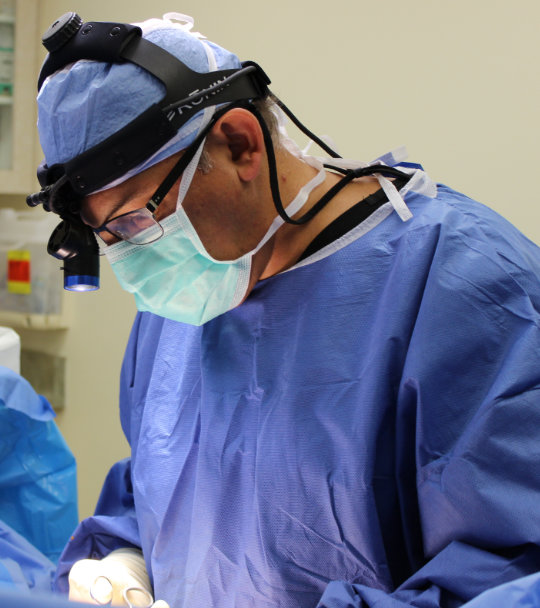
At Desired Beauty, Dr. Farzin Kerendian has performed rhinoplasty for patients throughout Southern California, bringing the surgical precision developed through his training at Weill Cornell Medicine and his fellowship in cosmetic and reconstructive surgery to every nose reshaping procedure. He holds board certifications from the American Board of Cosmetic Surgery, is a Fellow of the American College of Osteopathic Surgeons (FACOS) and a Fellow of the American Academy of Cosmetic Surgery (FAACS), and brings contributions to the International Journal of Cosmetic Surgery alongside a clinical reputation built on natural-looking outcomes and genuine patient partnership.
The practice maintains two locations — Beverly Hills/Los Angeles and Bakersfield — and serves patients from across California and beyond.
What Rhinoplasty Recovery Actually Looks Like
The immediate post-operative phase — the first week — involves a nasal splint, swelling, bruising around the eyes and nose, and restricted activity. Most patients describe this week as uncomfortable rather than painful, with the primary limitation being the obvious appearance of recent surgery and the requirement to rest with the head elevated.
By the end of week one to the early part of week two, the splint comes off. The face looks dramatically better. Bruising has faded substantially, and while swelling is still present, the nose is already beginning to show the shape that was planned. Most patients are comfortable returning to desk work and light daily activity by days 10 to 14.
By weeks three and four, the acute recovery is functionally complete. The majority of the visible swelling has resolved — not all of it, but most of it. The changes in shape are clearly visible. Patients can be out in the world without any obvious indication that a procedure was performed.
The final result of rhinoplasty arrives gradually, over the course of a year or more, as the last of the post-operative edema resolves and the tissues settle into their final position. But for the purposes of being able to attend events, return to work, and generally present to the world looking like yourself — that milestone arrives around weeks three to six for most patients.
A June surgery date means this milestone lands in July or early August — giving patients the rest of summer, and the entire fall social season, to enjoy results that are already well-established and continuing to refine.
What Rhinoplasty Can Address
Rhinoplasty is among the most technically demanding procedures in facial plastic surgery, and the range of concerns it addresses reflects the nose’s structural complexity.
- Profile irregularities — the dorsal hump, the saddle nose deformity, the irregular bridge — are among the most common presenting concerns for rhinoplasty patients. These are structural issues created by the underlying bone and cartilage, and their correction involves precisely reshaping those structures to create the smooth, balanced profile the patient is seeking.
- Tip refinement addresses the shape, projection, and rotation of the nasal tip — one of the most technically demanding elements of rhinoplasty because it requires precise work on the lower lateral cartilages and the overlying skin, and because the tip is the most visible and character-defining feature of the nose. An overprojected tip, a boxy or poorly defined tip, a drooping tip, or a tip that rotates too far upward — each presents its own surgical approach.
- Symmetry correction involves addressing the asymmetries that many noses have — deviations in the septum, unequal alar cartilages, differences in nostril shape — that create the impression of imbalance from the front view.
- Width and nostril refinement — reducing nostril width or reshaping alar flare — addresses one of the most common concerns among patients of diverse ethnic backgrounds seeking rhinoplasty that preserves cultural facial identity while achieving their aesthetic goals.
- Functional improvement — correcting a deviated septum or addressing nasal valve collapse that impairs breathing — is frequently performed in combination with cosmetic rhinoplasty, allowing patients to address both form and function in a single recovery.
Revision Rhinoplasty — The More Complex Conversation
A meaningful number of rhinoplasty patients at Desired Beauty have had prior surgery elsewhere and are seeking correction of unsatisfactory results. Revision rhinoplasty is among the most technically demanding procedures in all of plastic surgery — scar tissue, altered anatomy, and sometimes the absence of structural cartilage that was removed in the primary surgery create a fundamentally different operative landscape than primary rhinoplasty.
Dr. Kerendian’s fellowship training and his extensive experience with complex facial reconstructive cases positions him well for revision cases. The consultation for patients with prior rhinoplasty is longer and more detailed than for primary candidates — establishing exactly what was done, what the patient’s current concerns are, what structural resources are available, and what is realistically achievable.
The Consultation: What to Expect and Prepare
A rhinoplasty consultation at Desired Beauty is a genuine clinical evaluation and creative conversation. Dr. Kerendian examines the external structure of the nose — photographing from multiple angles, assessing the underlying cartilage and bone architecture, evaluating how the nose relates to the rest of the facial proportions — and asks patients to articulate specifically what concerns them.
This part matters more than many patients anticipate. “I just want it to look smaller” or “I don’t like my bump” are starting points, not complete clinical directions. What Dr. Kerendian is establishing is what specific structural changes would produce the result the patient is describing, whether those changes are technically achievable for this anatomy, and what the realistic final outcome looks like.
Patients are encouraged to bring reference images of results they find appealing and results they want to avoid. They should also expect an honest conversation about what is achievable given their specific anatomy — skin thickness, cartilage strength, existing asymmetries — and what is not. The practices that promise perfect symmetry and exact replication of a photograph are not being honest about what rhinoplasty can produce. Dr. Kerendian’s emphasis on realistic expectation-setting and genuine patient education is one of the consistent threads in the patient experience at Desired Beauty.
Schedule Your Rhinoplasty Consultation at Desired Beauty
Desired Beauty’s Beverly Hills/Los Angeles office is located at 2080 Century Park East, Suite 607, in Los Angeles. The Bakersfield office is at 2020 21st Street. Both are open Monday through Friday from 9am to 5pm.
Call the Beverly Hills office at (310) 274-4900 or Bakersfield at (661) 327-4400 to schedule your consultation. The timeline that puts you walking into fall looking like the best version of your face starts with a June appointment — and the conversation starts now.
Posted on behalf of