Of all the decisions a patient makes in the process of choosing a cosmetic surgeon, the verification of credentials is the one that most frequently gets skipped — replaced by before-and-after galleries, online reviews, and the impression from a consultation visit. These are useful inputs. They are not substitutes for understanding whether the physician performing your procedure has the specific training that cosmetic surgery requires.
The reason this matters is that the credential “board-certified physician” does not mean what most cosmetic surgery patients assume it means. A physician can be board-certified in an entirely unrelated specialty — emergency medicine, internal medicine, obstetrics — and legally perform cosmetic surgery procedures in California with no additional credential requirement. The credential that actually reflects specific training in cosmetic surgery is more specific than “board-certified,” and the difference between having it and not having it is clinically meaningful.
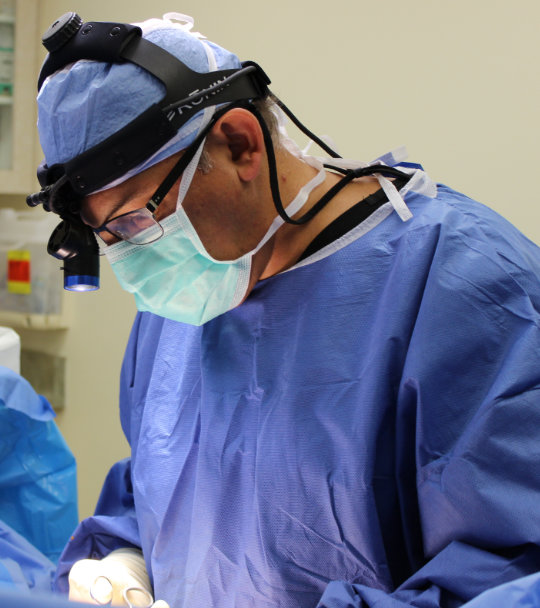
Dr. Farzin Kerendian of Desired Beauty in Beverly Hills and Bakersfield holds credentials that reflect the rigorous training this distinction requires — and understanding what those credentials represent helps patients evaluate the difference between equivalent-sounding options that are not, in fact, equivalent.
Why “Board Certified” Is Only the Beginning of the Question
In the United States, there are more than 24 physician specialty boards. When a physician is described as “board certified,” the certification could be in family medicine, radiology, psychiatry, or any other recognized specialty. Being board-certified in one of these specialties does not preclude a physician from performing cosmetic surgery, and does not indicate any specific cosmetic surgery training.
The certifications specifically relevant to cosmetic surgery include board certification by the American Board of Plastic Surgery, the American Board of Cosmetic Surgery, or fellowship certification by organizations like the American College of Osteopathic Surgeons or the American Academy of Cosmetic Surgery. These credentials require specialty-specific training programs, examinations, and case volume requirements focused on the procedures they certify.
Dr. Kerendian is a board-certified cosmetic and reconstructive surgeon who is a Fellow of the American College of Osteopathic Surgeons (FACOS) and a Fellow of the American Academy of Cosmetic Surgery (FAACS). Both fellowship designations require demonstrated competency specifically in cosmetic and reconstructive surgical practice — not general medicine, not a related surgical specialty, but the specific procedures that cosmetic patients seek. He is also a Doctor of Osteopathic Medicine (DO), a full medical degree equivalent to an MD with additional training in the musculoskeletal system that informs his approach to form, function, and structural result.
The Training Background That Produces Better Outcomes
Credentials document training. Understanding what that training involved tells you what a surgeon is actually prepared to do.
Dr. Kerendian’s surgical training began at the Weill Cornell Medicine / Cornell University hospital system in New York City — one of the most prestigious academic medical centers in the country. He was recognized with the chief resident position, a distinction awarded to the resident identified by the program faculty as most exemplary in clinical skill, leadership, and knowledge. This is not an honor that is given to every resident; it is a recognition by the faculty of a program who observe every resident closely over years of training.
Following his residency, he completed a fellowship specifically in cosmetic and reconstructive surgery under surgeons identified as industry luminaries in the field — the structured, supervised training in cosmetic procedures that distinguishes fellowship-trained surgeons from those who learned cosmetic procedures through workshops or limited training additions to non-cosmetic residencies.
The surgical skill that produces the outcomes patients describe in their reviews of Desired Beauty — the precision of suture technique that makes scars fade almost invisibly, the attention to symmetry, the structural understanding of how to address a face or body so that the result looks like the person at their best — is the product of this specific training history. It is not generalizable to physicians whose training focused on unrelated areas.
Facility Accreditation Is the Safety Credential Most Patients Don’t Think to Ask About
The setting in which surgery is performed matters as much as who performs it. In California, outpatient surgery centers — the facilities outside of hospitals where most cosmetic procedures are performed — are not uniformly subject to the same accreditation requirements as hospital-based surgery. Accreditation by the Accreditation Association for Ambulatory Health Care (AAAHC) — which both Desired Beauty locations hold — is the gold standard for outpatient surgical care.
AAAHC accreditation involves a rigorous on-site review of the facility’s safety protocols, equipment standards, infection control procedures, staff qualifications, anesthesia management, and emergency preparedness. It is renewed through ongoing compliance and periodic re-evaluation. For patients choosing an outpatient setting for cosmetic surgery, it is the credential that verifies the facility meets the highest standards of patient safety.
Desired Beauty employs a board-certified anesthesiologist at both locations — not a nurse anesthetist alone, as is common at many cosmetic clinics, but a physician with specialty training in anesthesiology. For patients who will undergo general anesthesia or IV sedation, the qualification of the anesthesia provider is a safety variable that deserves explicit consideration.
What to Ask Before Any Cosmetic Surgery Consultation
The questions that most effectively differentiate surgeons are not “how many of these procedures have you done” — because self-reported volumes are not independently verified — but rather questions about training that have specific, verifiable answers.
Which specialty board are you certified by, and what does that board specifically require? Where did you complete your surgical residency, and what was the specialty? Did you complete a fellowship specifically in cosmetic surgery, and with whom? Is this facility accredited, and by which organization? Who will be administering anesthesia, and what are their qualifications?
These questions have specific, factual answers. A surgeon who is board-certified specifically in cosmetic surgery, trained at an academic medical center in a surgical specialty, and operating in an accredited facility with a board-certified anesthesiologist is giving you a specific, verifiable picture of what you’re selecting. Dr. Kerendian answers all of these questions with credentials that represent the highest standard at each level.
Schedule Your Consultation at Desired Beauty
Dr. Farzin Kerendian and the Desired Beauty team welcome confidential consultations at both Beverly Hills and Bakersfield locations. Dr. Kerendian personally meets with every patient, reviews their concerns, and provides honest guidance about what procedures would and would not achieve their goals — a consultation approach that patients consistently describe as markedly different from the high-pressure, recommendation-heavy consultations they encountered elsewhere. Call (310) 274-4900 or visit desiredbeauty.com to schedule. The credentials are verifiable. The outcomes speak for themselves.
This information is educational and not a substitute for an in-person evaluation with a qualified physician. Surgical results vary by individual.
Posted on behalf of